

How to Spot Window Frame Damage from Spring Moisture
May 11, 2026 1:36 pmSpring is one of the most beautiful times of year, but it also brings with it a surge of moisture that can quietly wreak havoc on your home. Rain, humidity, and temperature swings create the perfect storm for window frame damage, and most homeowners do not notice the signs until the problem has already grown expensive. Learning how to identify early moisture damage is one of the smartest investments you can make in your home’s spring maintenance routine. Catching issues early means simpler fixes, lower costs, and better window longevity for years to come.
Whether your frames are wood, vinyl, aluminum, or composite, spring moisture affects each material differently. The key is knowing what to look for, where to look, and when to act. This guide walks you through the most important warning signs so you can stay ahead of the damage before it spreads into your walls, sills, or interior surfaces.
Why Spring Moisture Is a Threat to Window Frames
To understand why spring is such a critical season, you have to consider what your window frames endure during the winter months. Cold temperatures cause materials to contract, and when warmer spring air arrives, everything expands again. This constant cycle of shrinking and expanding creates small gaps, cracks, and weaknesses in the frame material and in the sealant around it.
Add spring rain to the equation and those tiny vulnerabilities become entry points for water. Moisture seeping into a compromised frame does not just stay there. It travels. It moves into surrounding wood, insulation, and drywall. Left unchecked, even minor moisture damage can escalate into mold growth, structural rot, and air leaks that drive up your energy bills. Spring maintenance is not just about keeping things looking nice. It is about protecting the structural integrity of your home from the inside out.
For homeowners who want to avoid costly window frame repair down the road, the solution starts with knowing where and how to look for damage before it progresses.
Visual Signs That Moisture Has Already Set In
The most accessible way to check for moisture damage is a simple visual inspection, and you do not need any special tools to get started. Walk around the exterior of your home on a dry day after a recent rain and take a close look at each window frame. What you are looking for is anything that breaks the smooth, sealed surface of the frame.
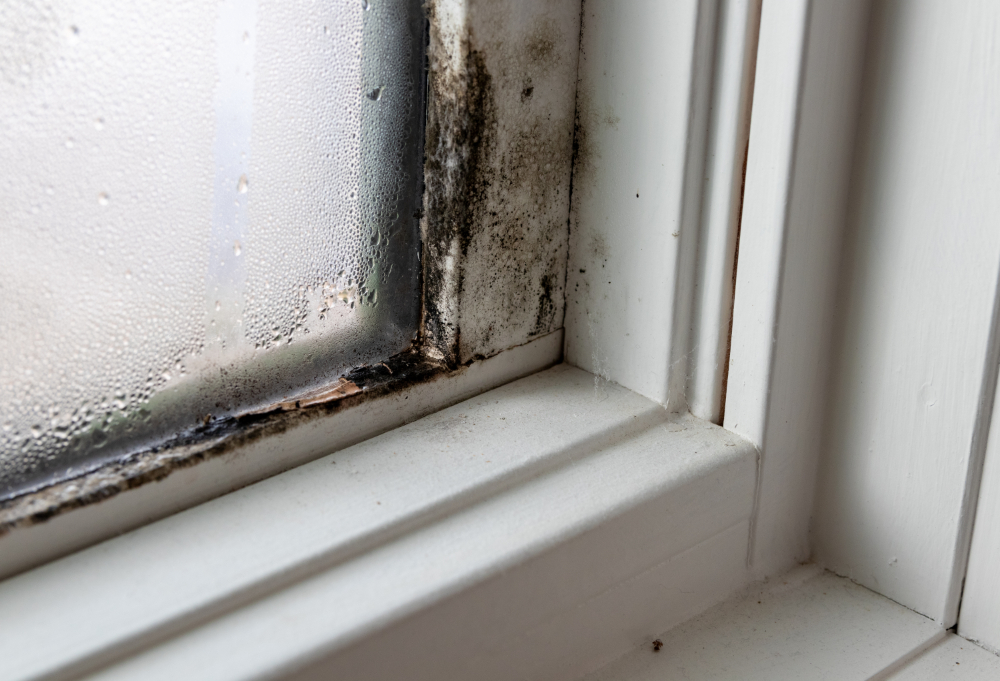
On wood frames, look for discoloration. Dark staining, often in a grayish or greenish tone, is one of the earliest indicators of moisture infiltration. You may also notice that the paint is beginning to bubble, peel, or flake away from the surface. Paint does not just peel on its own. It peels because moisture is pushing up from underneath, trying to escape. This is one of the clearest signals that water has already found its way inside the frame material.
Soft spots or sponginess are another red flag. Press gently along the edges and corners of the frame with your finger. Healthy wood should feel firm and solid. If any section gives under light pressure, that area has likely begun to rot. Rot spreads, so even a small soft spot warrants a closer look and potentially professional window frame repair before the season gets wetter.
On vinyl and aluminum frames, the visual signs can be subtler. Look for warping, separation at the corners, or gaps forming between the frame and the surrounding wall. Discoloration in the form of water stains or streaks running down the frame is also a sign that moisture is moving through areas where it should not be.
Checking Seals, Caulking, and Weatherstripping
The seal around your window frame is your first line of defense against moisture intrusion, and it is one of the most commonly overlooked areas during spring maintenance inspections. Over time, caulking dries out, shrinks, and cracks. Weatherstripping compresses and loses its ability to form a tight barrier. When either of these fails, spring rain has a direct path into the frame and surrounding structure.
Run your finger along all the caulking lines where your window frame meets the exterior wall. If the caulk feels dry and crumbly, or if you can see visible cracks and gaps, those areas need to be resealed. Even hairline cracks in caulking can allow significant moisture to enter over the course of a wet spring season.
Check the weatherstripping around the interior edge of the frame as well. If it looks flattened, torn, or no longer springs back when compressed, it is time to replace it. Good weatherstripping is essential not just for moisture protection but also for energy efficiency. Gaps in the seal allow conditioned air to escape, making your heating and cooling systems work harder.
Attending to seals and caulking is one of the simplest and most cost-effective parts of spring maintenance. A tube of exterior caulk costs just a few dollars and can prevent damage that costs hundreds or thousands to repair later. This small step contributes enormously to window longevity.
Interior Clues That Moisture Damage Is Present
Do not limit your inspection to the outside of your home. Some of the most telling signs of window frame moisture damage appear on the interior, and catching them early can help you pinpoint exactly where water is getting in.
Stand inside each room and examine the area around every window. Look for water stains on the wall or ceiling near the frame. These stains often appear as yellowish or brownish rings and indicate that water has been pooling or running in that area. If you see peeling paint or bubbling drywall near a window, that is a strong sign that moisture is working its way through the frame from the outside.
Condensation between the panes of glass is another interior signal worth noting. While this does not always mean the frame itself is damaged, it does indicate that the window seal has failed. A compromised seal allows humidity to enter the space between panes, and that same humidity can begin to affect the surrounding frame material over time.
Musty odors near windows are among the most overlooked warning signs. Mold and mildew thrive in moist, dark spaces, and a window frame that has absorbed moisture provides exactly that kind of environment. If a room smells damp or earthy near a window even when it has not been opened, do not ignore it. That odor can be an early indicator of mold beginning to develop inside the frame or the wall cavity behind it.
Addressing interior moisture damage quickly reduces the likelihood that you will need extensive window frame repair and helps preserve overall window longevity throughout the coming seasons.
When to Call a Professional for Window Frame Repair
Some moisture damage is well within the range of a confident DIYer to address. Replacing caulking, swapping out weatherstripping, and touching up paint are all manageable weekend projects. But there are clear situations where calling in a professional is the smarter and safer choice.
If you discover significant rot in a wood frame, especially if it extends beyond a small isolated area, professional intervention is necessary. Rot that reaches the structural elements of the frame or spreads into the surrounding wall framing is not a surface-level problem. It requires careful removal of the damaged material, treatment to prevent further growth, and precise replacement to ensure the new frame is properly sealed and supported.
Similarly, if you are seeing moisture stains on interior walls or ceilings in multiple rooms, or if the damage seems to be recurring season after season despite your repairs, a professional inspection can identify whether the problem lies with the window frame itself or with something deeper in the building envelope.
Investing in professional window frame repair when needed is a critical part of protecting your home’s long-term health and maximizing window longevity. Delaying that call often turns a manageable repair into a major renovation.
Conclusion
Spring moisture is a silent threat to window frames, but it does not have to catch you off guard. By building a thorough inspection into your annual spring maintenance routine, checking for visual damage, inspecting seals and caulking, and paying attention to interior warning signs, you give yourself the best chance of catching problems early. Early action keeps window frame repair simple and affordable, and it protects the longevity of one of your home’s most important features.
Need Custom Glass Near You?
Custom Glass & Screen has been servicing Twin Cities since 1975. We repair custom and insulated glass and screens for windows, doors, shelving, showers, mirrors, tabletops, fireplaces, storefronts, porches, and more. We are also a family-owned company associated with the NFID. We have a highly trained staff that is here to help with anything that you need, so stop in, email, or give us a call today!
Categorised in: Window Repair
This post was written by admin